
Best Practices for Organizing Complex Automations When Nothing Is Working Right
For real, organizing a bunch of automations is already kind of like herding cats. But it gets even weirder when you log in one morning to fix something minor and realize: not only is the automation broken, but you don’t even know what it originally did. It’s just staring at you like ¯\_(ツ)_/¯ while 17 tasks sit in limbo.
This is for all of us who’ve built a 5-step Zap that turned into a 23-step FrankenZilla, or watched Notion do something unexplainable because the properties didn’t sync from Zapier the way they’re supposed to. Let’s talk through some of this chaos in a way that actually makes sense if you’re not a developer. No flowcharts necessary.
1. Naming conventions that do not betray your future self
Let me confess: I used to name Zaps things like “Calendar Update Copy” because, in my mind, I’d *definitely* remember why I duplicated that Zap later. Nope. Every time I open the Zap dashboard now, it’s a tomb of ghosts named “Copy of Copy of Zap Template.”
So the absolute first guardrail I set for myself: name the automation like I’m going to read it *six months after a head injury*. Example:
→ “CRM to Notion – New Deal Tracker Sync (Salesforce > Notion)”
→ “S3 Backup Nightly ZIP – Export Airtable Daily to AWS”
→ “Auto Reminder (Calendly Booked) – Send AirTable Record + Email”
Also, start your automation names based on the source of data, not the outcome. It’s way easier to audit later when everything begins with the tool that kicked it off. I don’t care that it “Creates a pdf” — if it started in Typeform, the name better start with “Typeform.” This way, when something breaks, you’ll figure out what broke *faster* just by scanning the titles.
The bonus trick: I also add the automation platform at the end if I use multiple (e.g., Zapier, Make, or Pabbly). That got especially helpful when I migrated a bulk of my logic off Zapier (after it bizarrely duplicated five hires in BambooHR over one weekend). But that’s another story 🙃
2. Break Frankenstein automations into single-purpose chains
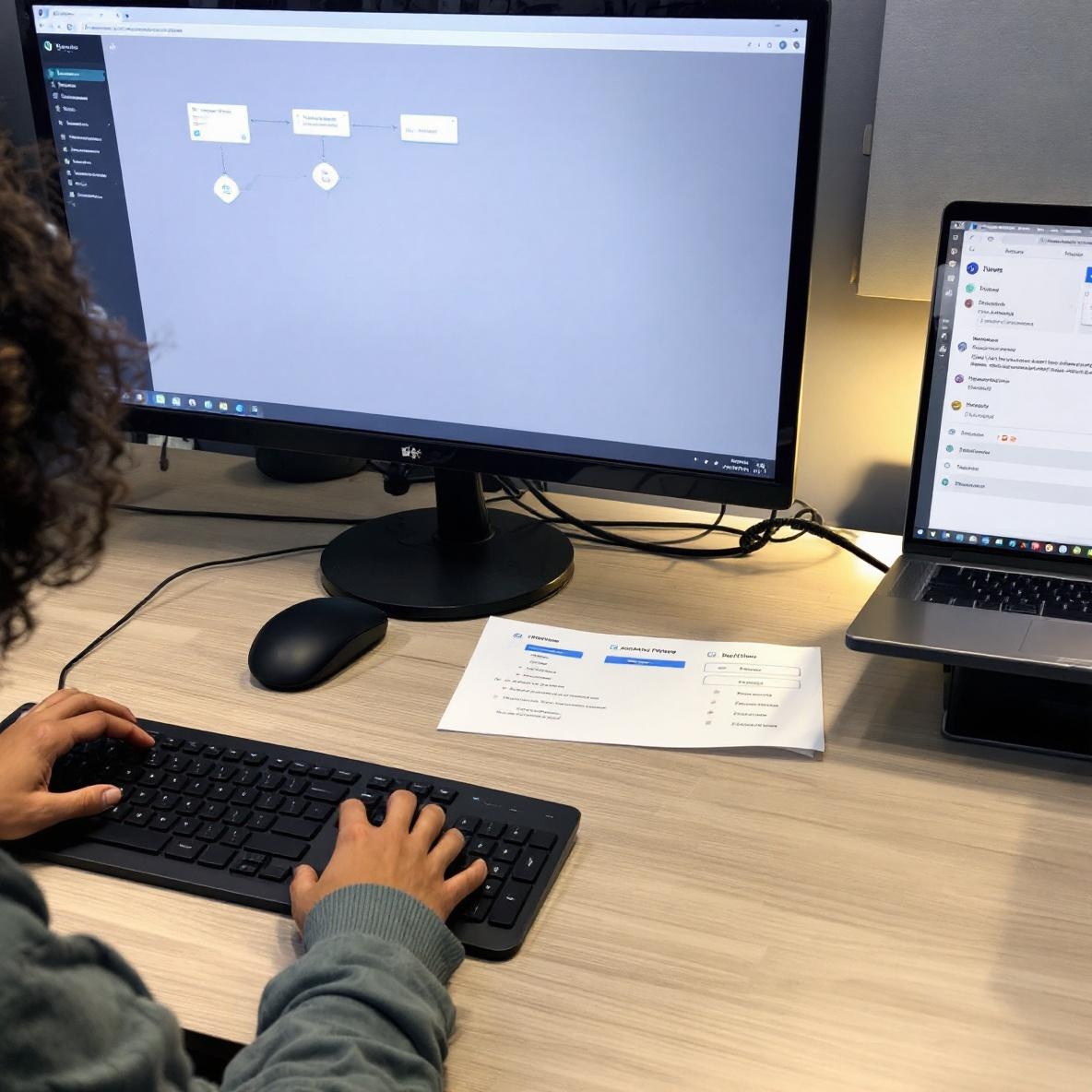
I used to think having *one master Zap* that “did everything” was impressive. Like a digital Rube Goldberg machine. But in reality? Those are the worst to debug. If anything goes wrong, you sit there for 30 minutes trying to figure out if the issue came from step 3 or 17. And then some arcane filter rule you forgot even exists blocks the whole thing.
After I got burned by a Zap that silently failed to update promo codes in Webflow because my conditional path misread the Shopify tag, I switched things up.
Now, I break things into atomic flows:
→ Automation A: Form submission to Airtable record
→ Automation B: Airtable status change to webhook request
→ Automation C: Webhook result moved into Slack DM + notification
Yes, it’s more Zaps. Yes, your dashboard looks fuller. But *each workflow is isolated*, and that matters more. If I get an error now, it’s obvious which automation caused it. Plus, I can disable/rebuild one without nuking the others.
And here’s where it gets spicy: I store all critical outputs (IDs, timestamps, status values) in Airtable after each automation step. Not only does that let me diagnose broken ones faster, but I can also manually *resume* a workflow at the correct point if it failed halfway without triggering anything twice. Trust levels = restored 😅
3. Use internal logs to track invisible steps
There was a stretch last month when I thought all my Google Docs were getting renamed by gremlins — turns out, Make.com was prematurely running a path because my router’s filter logic didn’t wait for the Google Drive search step to complete.
That’s when I started keeping my own logs.
Now, in any automation where:
– Multiple data lookups occur (e.g., cross-browser tasks)
– Actions write into different systems (e.g., Notion and Slack)
– Some steps are optional paths or branching
I always write a mini “what just happened” string into a dedicated log sheet. Could be Airtable, Google Sheets, or even a hidden Notion DB.
Example entry:
> [Timestamp: 10:52 AM] → New hire form submitted by Alice → Lookup success: Employee ID 45322 → Slack sent → BambooHR updated → Email skipped (no email provided)
This has saved me *so many times*. Just yesterday, I noticed that a message randomly skipped sending because the Notion integration silently applied a 1000-character limit to a text field if it was connected to a multi-property rollup. Didn’t know that was a thing 😑
Airtable logs also show me if two automations are stepping over each other. I had one trigger too soon and another trying to write different statuses onto the same record. Since Google Sheets will randomly overwrite instead of merge cell data, stuff gets lost that way.
4. Create sandbox versions and run them purposely wrong
Look, I’ve been fooled by this too. When you test an automation once, and it passes, your brain instantly assumes it’s fine — just because *you* used ideal data. But real users never use ideal data 😅
So now, before I hit publish on anything, I create a sandbox version of the workflow with deliberately bad inputs:
– Empty fields
– Wrong date formats (Europe vs US)
– Numbers as strings, strings as numbers
– Malformed email addresses
– Unexpected spacing or casing (e.g., ” Yes” instead of “Yes”)
I’ve caught silent fails this way that I never would’ve seen otherwise. For example, one Webflow + Airtable integration didn’t trigger at all if the submitted form had a currency symbol in it. That wasn’t documented anywhere, it just dropped the entry.
Also, always add dummy users when testing multi-step setups — it’ll show you if filters or paths are accidently scoped to only your account. I ran a system last week where the Slack messages *only* triggered for me. Yep, the automation had a default user ID filter pre-applied when installing the Slack module. You wouldn’t know unless you checked some obscure config buried three clicks in.
5. Keep a living control manual in Notion or Airtable
This part takes a bit of setup — but once I started doing it, I basically stopped dreading automation audits.
I set up a Notion database that mirrors every important automation. Each record includes:
– What triggers it (source app and how)
– What it does (plain-language summary)
– What apps it touches
– Data dependencies (important fields, table names)
– Links to: the live automation, sandbox version, related documentation
– “Last altered by” and “Date modified” fields
Bonus category: Known bugs or caveats.
I have a whole section for weird edge cases like “This breaks if user has no avatar in Slack” or “Fails silently if dropdown option is added without updating the mapping.”
Now, when I hand off work or walk someone through it, it’s all there. More importantly, *when stuff breaks for no reason,* I’m not retracing my own logic from memory.